
Natural or lab-grown diamond: how it’s evaluated
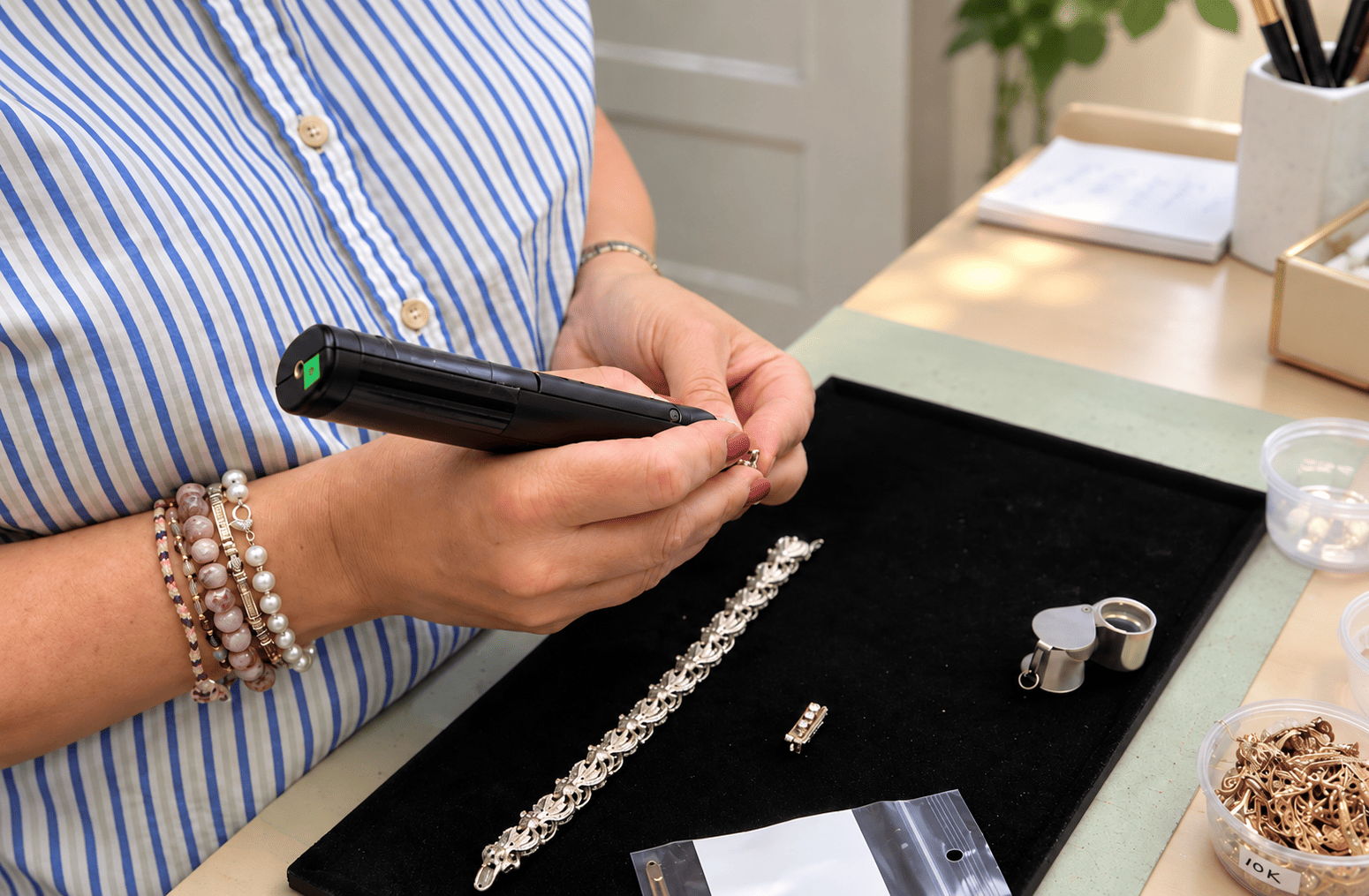

Do you have a piece of jewellery with a diamond and wonder whether the stone is natural or lab-grown? The question comes up often when it’s time to have a piece appraised or sold. At La Puce d’or, our jeweller-watchmakers examine natural and lab-grown diamonds every week, and a stone’s origin has a concrete effect on what it is worth.
The essentials
- A natural diamond and a lab-grown diamond have exactly the same chemical composition: only their origin differs.
- Even an experienced jeweller cannot tell them apart with the naked eye.
- A diamond’s origin directly affects its buyback value, and it is often the most important question to settle before an appraisal.
- Our jeweller-watchmakers determine the origin and true value of your piece right in the store, no appointment needed.
Natural diamond, lab-grown diamond: one stone, two origins
A natural diamond formed in the Earth’s mantle, under extreme heat and pressure, over millions of years. A lab-grown diamond is created by people in a controlled environment that reproduces those same conditions in just a few weeks.
The distinction ends there. Chemically, physically, and optically, the two stones are identical: same hardness, same brilliance, and same ability to refract light. The only thing that changes is how the stone came to be.
Why the difference can’t be seen with the naked eye
This is the point most people underestimate: it is impossible to tell a natural diamond from a lab-grown diamond with the naked eye, and even examination under a loupe is generally not enough. Only specialized screening instruments, of the kind used in gemology, can confirm a stone’s origin with certainty.
This is not just a technical curiosity. In Canada, the Competition Bureau’s guidelines govern how a diamond’s origin must be presented to consumers, precisely because confusion between the two types of stone can lead to misleading claims. In other words, reliable identification is not a detail: it is a matter of accuracy that protects buyer and seller alike.
What really changes when you sell or have a piece appraised
This situation is where a diamond’s origin stops being a theoretical question and becomes a very real question of value.
The buyback value of a natural diamond
A natural diamond draws its value from its geological rarity. Each stone took millions of years to form, and global supply remains limited. This rarity generally supports the value of a natural diamond better over time, which often makes it a better choice for someone considering a future resale or inheriting an older piece.
What a lab-grown diamond is really worth at buyback
A lab-grown diamond can be produced in a few weeks, in practically unlimited quantities. This availability, which explains its more accessible purchase price, also works the other way at buyback: rarity does not come into play in the same way. Some Quebec jewellers observe a price gap that can reach several thousand dollars between a natural diamond and a lab-grown diamond of comparable size. That is precisely the kind of gap that justifies a professional appraisal before making a decision, whether to sell, to insure, or simply to know the value of a family piece.
How our jewellers and watchmakers determine the origin of your diamond
At La Puce d’or, the appraisal of a diamond never rests on a visual impression. Our jewellers and watchmakers rely on years of experience and professional screening tools to confirm a stone’s origin before assessing its value. It is this combination, the trained eye and the right equipment, that makes the difference between a rough estimate and a reliable appraisal.
This rigour is part of La Puce d’or’s artisanal tradition, which for more than 35 years has combined the skills of the jeweller and the watchmaker in the heart of Montréal’s Rosemont neighbourhood.
FAQ: Natural diamonds, lab-grown diamonds, and appraisals at La Puce d’or
Is a lab-grown diamond a real diamond?
-
Yes. It has the same chemical composition, the same hardness, and the same optical properties as a natural diamond. Only its origin, human rather than geological, sets it apart.
Can you see the difference with the naked eye?
-
No, even an experienced jeweller cannot see it without specialized equipment. That is why a professional appraisal remains the only reliable way to know a stone’s true origin.
Does a lab-grown diamond have resale value?
-
Yes, but generally less than a comparable natural diamond because of its greater availability. The exact gap depends on several factors specific to each stone, which is why an individual appraisal matters.
How does an appraisal work at La Puce d’or?
-
A jeweller-watchmaker examines your piece right in the store to determine its origin and value.
Do I need an appointment to have a piece of jewellery appraised?
-
No. La Puce d’or welcomes customers without an appointment, seven days a week.

Have your jewellery appraised by our experts
Whether you want to sell an inherited piece, have a piece reappraised for insurance, or simply find out what you own, our jeweller-watchmakers are on site to help.
